
Instructions for data collection
How do I complete my Ingesta® Food Record?
Before you begin, we invite you to choose a complete reference day (three consecutive days for the Ingesta® 3-day Food Record). Your food diary must cover each day in its entirety, from waking up until bedtime.
I open the WhatsApp or Telegram chat
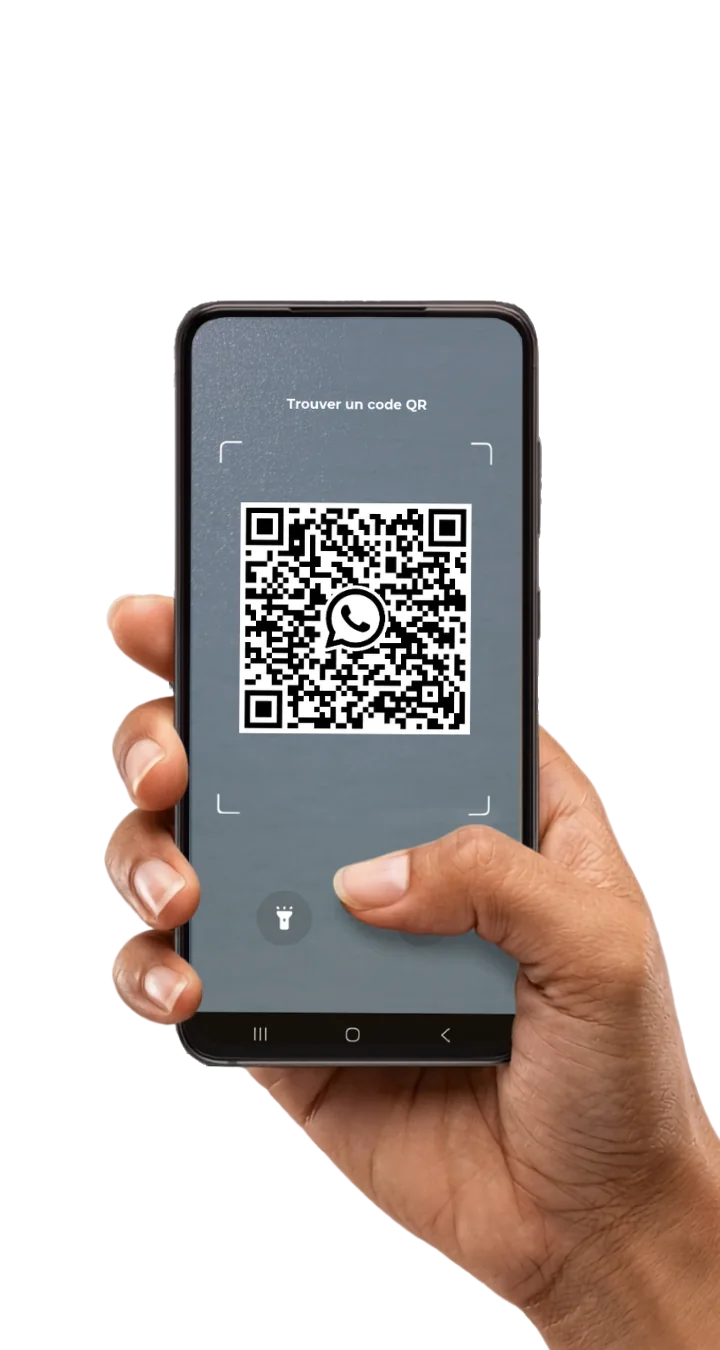
Click the WhatsApp or Telegram button, or open the link received by email on your mobile phone. If you are on a computer, scan the QR code with your phone.
Link to open on your phone:
https://wa.me/@ingestaOr on Telegram:
https://t.me/ingesta_net_bot
On Telegram, tap “Start”, then “Share my number”. Your Telegram account must use the number you gave us.
I activate my tracking
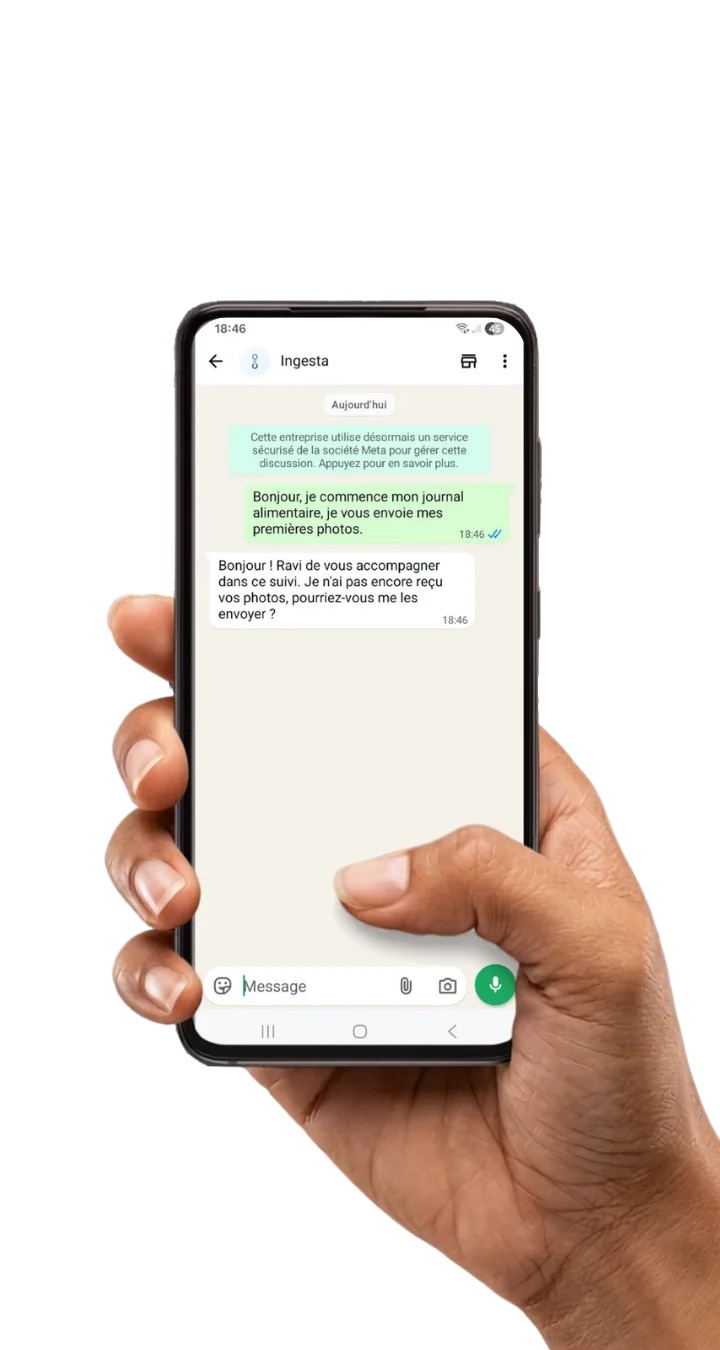
On the day you start, reply to the welcome message you received on WhatsApp (or send "Hello") to verify your identity and activate your tracking.
I send my meals and comments
During your day (or your three days), simply take photos of all your meals, snacks, and drinks, in order of consumption, and send them directly in the discussion. You can also add details via text messages or voice notes if you wish.
I receive my results
At the end of your record, it is securely transmitted for analysis.
Your results will then be sent to you by secure e-mail within 24 hours, during working days.
Ingesta® 3-day Food Record: a nutritional assessment that can be added to your medical record.
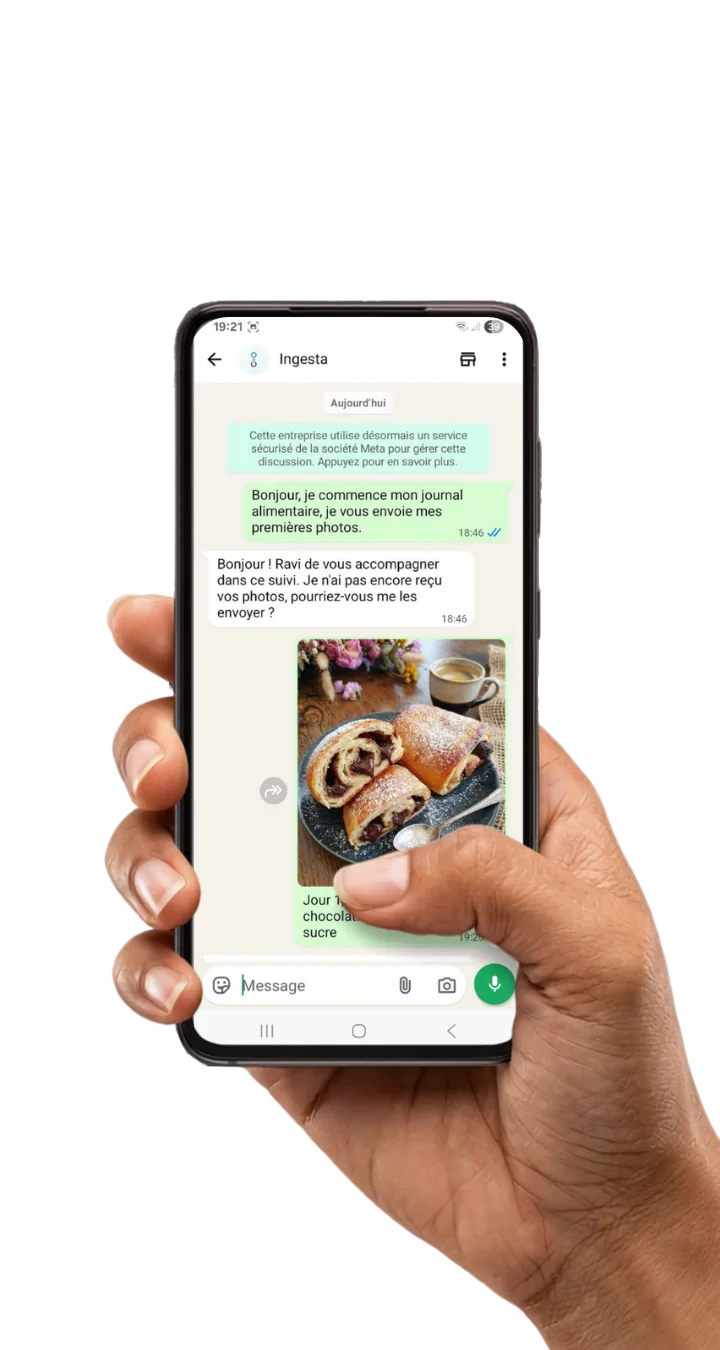
- Our collaborative method consists of documenting your diet over 1 or 3 consecutive days, in order to record your eating habits more precisely.
- This requires your commitment to collecting photos and/or videos of your meals.
- This method has shown to reduce bias in data collection.
Measurements
- If you cannot measure the diameter (away from home), add a reference object near the plate to give an idea of the size (such as a spoon, a coin, or a hand) next to the food.
- If you can, use the same plate for each meal, this will make comparison easier.
- Try to keep the different foods on the plate separate: meat, fish, eggs, vegetables, starches (rice, potatoes, roots, breadfruit, semolina, corn).
- Avoid overly complex or mixed dishes that make it difficult to identify the foods.
- If you do not finish your plate, take a photo of the leftovers; likewise if you have a second serving, specify it by message.
The plates
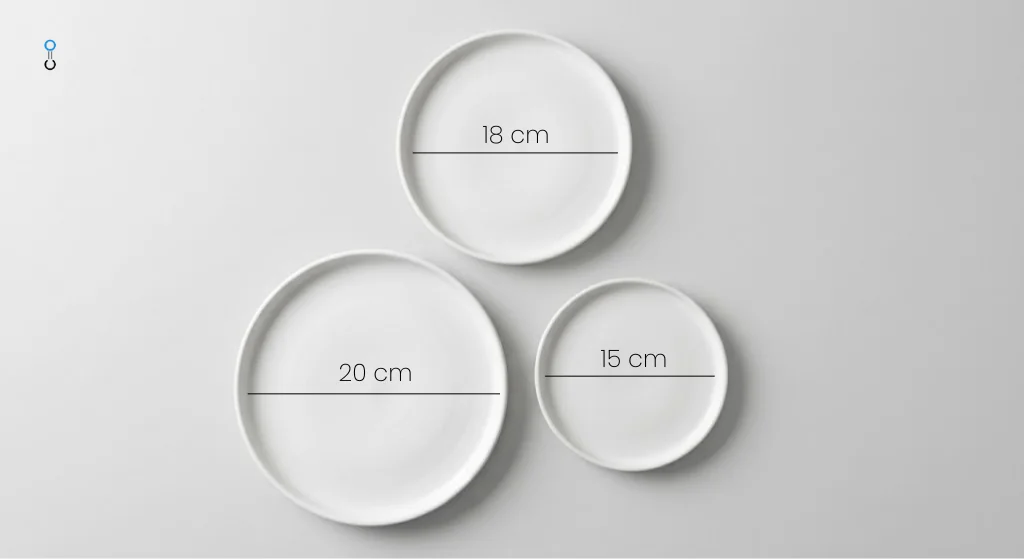
Before taking the first photos, measure the diameter of the plates:
- Bread plate: diameter 15 to 17 cm
- Dessert plate: diameter 18 to 20 cm
- Salad plate: diameter 20 to 22 cm
- Dinner plate: diameter 26 to 28 cm
These are general sizes that may differ slightly depending on the manufacturer, style, and region.
The cups
Before taking the first photos, measure the diameter of the cups. Here are the general measurements of commonly used cups:
- Coffee cup: capacity 100 to 150 mL (diameter 7 to 8 cm)
- Tea cup: capacity 150 to 250 mL (diameter 8 to 9 cm)
- Espresso cup: capacity 60 to 90 mL (diameter 5 to 6 cm)
- Cappuccino cup: capacity 180 to 240 mL (diameter 9 to 10 cm)
- Hot chocolate cup: capacity 200 to 300 mL (diameter 10 to 12 cm)
For drinks, tell us how many glasses or cups you consumed (e.g., 1 cup, ½ cup, etc.).
The bowls
Before taking the first photos, measure the diameter of the bowls. Here are the general measurements of commonly used bowls:
- Cereal or medium bowl: capacity between 300 and 500 mL (diameter 14 to 16 cm)
- Large bowl: capacity between 500 and 800 mL (diameter 16 to 18 cm)
- Soup bowl: capacity between 300 and 500 mL (diameter 12 to 14 cm)
If you cannot measure the diameter (away from home), add a reference object near the bowl to give an idea of the size (such as a spoon, a coin, or a hand).
The glasses
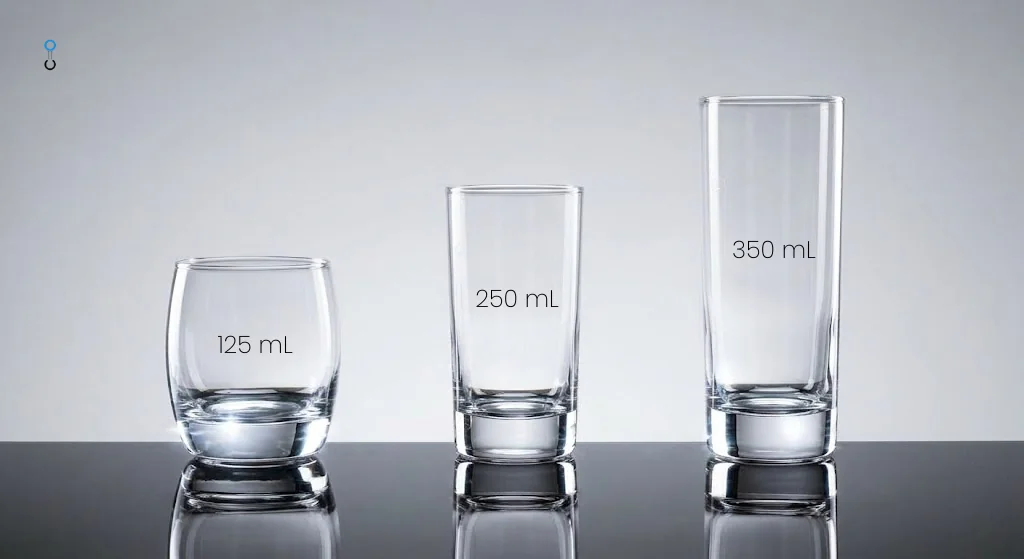
Before taking the first photos, measure the diameter of the glasses. Here are the measurements of commonly used glasses:
- Water glass: capacity 250 to 350 mL (diameter 7 to 8 cm)
- Juice glass: capacity 180 to 250 mL (diameter 6 to 7 cm)
- Wine glass: capacity 120 to 180 mL (diameter 5 to 6 cm)
- Shot glass: capacity 30 to 60 mL (diameter 3 to 4 cm)
For drinks, if you have transparent glasses, that's perfect!
The cups/coupes
Before taking the first photos, measure the diameter of the coupes. Here are the general measurements of commonly used coupes:
- Champagne coupe: capacity 150 to 200 mL (diameter 5 to 6 cm)
- Martini coupe: capacity 120 to 180 mL (diameter 10 to 12 cm)
- Dessert coupe: capacity 150 to 200 mL (diameter 7 to 8 cm)
Sweet products and butter
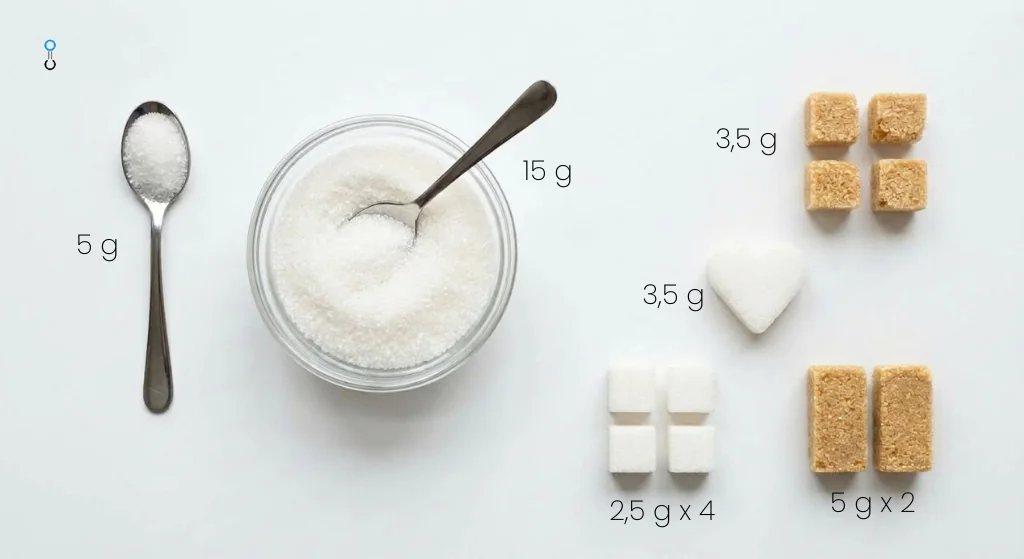
Specify the amount of sugar in your coffee, tea:
- Teaspoon (small spoon): equivalent to about 5 grams
- Tablespoon (large spoon): level usually equivalent to 10 or 15 grams for a rounded tablespoon
- 1 small spoon (teaspoon) is equivalent to about 5 grams
- 1 pat of butter (or 1 rounded teaspoon) is equivalent to about 10 grams
Additions and leftovers
Mention the addition of condiments, spices at the table, with quantities if possible:
- 1 pinch of salt is generally equivalent to about 1 to 2 grams or 1/8 of a teaspoon
- 1 pinch, 1 teaspoon, tablespoon, piece, etc.
- salt, pepper, sugar, ketchup, mayonnaise, vinaigrette, sauces, chili, mustard
To estimate the amount of oil, use simple measures like spoons. Likewise, if you don't finish your dish, remember to take a picture of your plate after your meal!
Bread
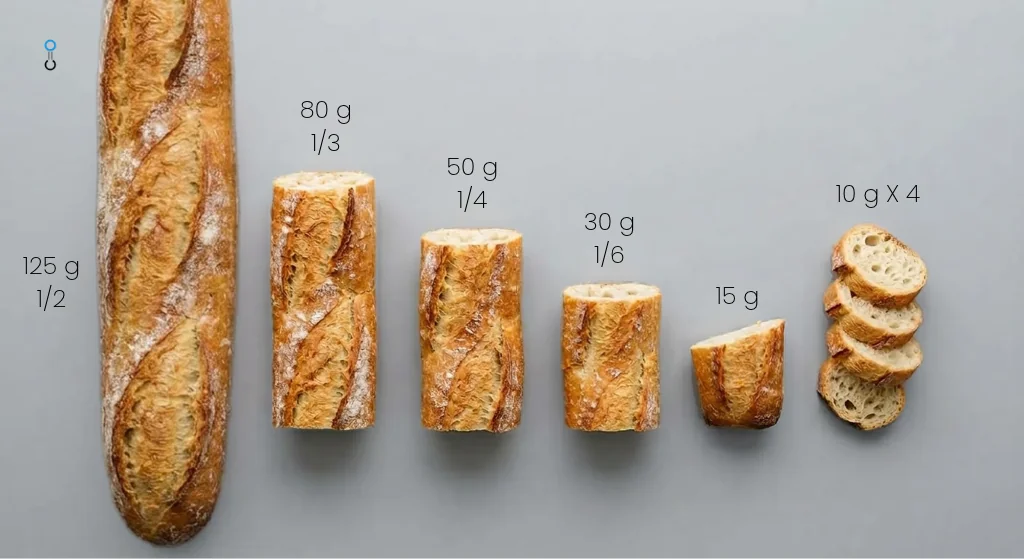
For bread, indicate the type and quantity:
- ½ baguette ...
- ¼ baguette ...
- 1 slice of whole wheat sandwich bread ...
Use WhatsApp or Telegram to send us photos or videos with a caption or voice message
Meal Name and Details
Add additional details to your photos or videos by written or voice message and specify the name of the meal:
- Breakfast …
- Snack …
- Lunch …
- Dinner …
- Grignotage/Nibbling …
- Afternoon snack (Goûter) …
Drinks, Additions, Place, and Portions
Specify the drink that accompanies the meal:
- Breakfast, 1 large cup of coffee…
Specify additions:
- Breakfast, 1 large cup of coffee, with a sugar packet ...
Indicate the location of the meal: at home or eating out:
- Breakfast, 1 large cup of coffee, with a sugar packet, at the bakery ...
Provide info on portions: a handful (for nuts, dried fruit) and the count for small fruits (strawberries, cherries, apricots):
Example of text accompanying photos
- Breakfast, 1 large cup of coffee, with a sugar packet, at the bakery, with 1 handful of nuts ...
- Breakfast (6:30 AM) with fresh pineapple juice, 1 cup of coffee, 2 slices of bread
- Lunch: Chicken Colombo at a restaurant, with 1 small beer
- Dinner: at home, meat (beef) in tomato sauce, Brussels sprouts with 1 tbsp of cheese, drink: 1 large glass of soda
- Water: 1 bottle of mineral water throughout the day
Framing of photos and videos
- Take all photos from roughly the same distance to easily compare portion sizes.
- Avoid taking flat photos, as this makes it difficult to estimate quantities.
- Prefer side shots for a better perception of volume.
Sending via mobile phone
To send your photos, videos and/or messages, use the WhatsApp or Telegram link received by email.
- If you cannot send the photo in real time before the meal or if you forgot to take a photo, please provide additional information about the context of the meals: please note the relevant details for each meal, such as the time the meal was taken, the location, the social setting, or the emotional state during meals or snacks.
- If a photo of your meal does not suit us, we may contact you to ask for details directly.
- Recording home recipes: if you prepare home-cooked meals, you can specify the ingredients and preparation methods for the recipes.